
Astrology & Mysticism
Try drawing astrology symbols
Unlock the secrets of the stars using ancient symbols
Astrology & Mysticism
Explore the "Mystery religions" of ancient Greece and Egypt to find guidance from the stars, cosmic energy, and ancient wisdom.
 3 min practiceCan be done any time of dayWonder
In Mysticism, art and symbolism are tools that can help you become closer to the divine.
Symbols, mathematics, and science are seen as fingerprints of the Creator on creation that can be used to help humans "retrace" the steps of creation from the material world of "Physis" (Φύσις) back to the universal consciousness of the Creator.
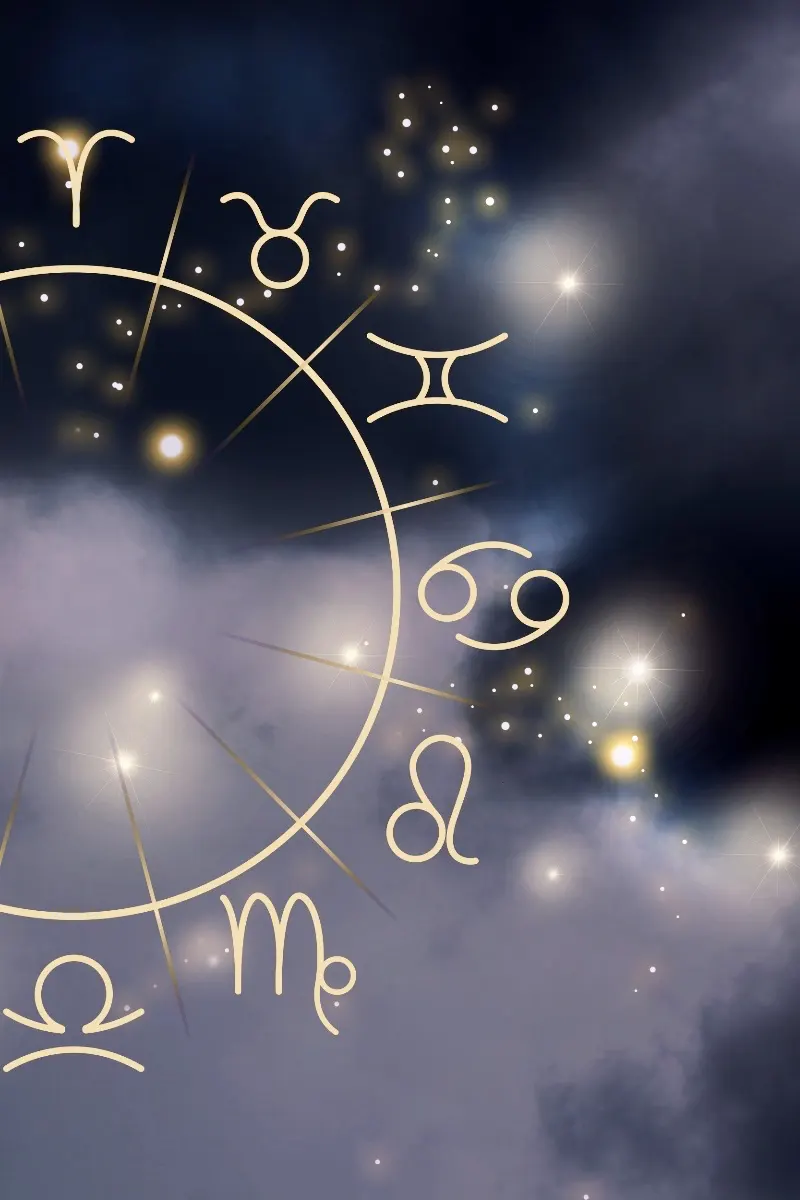
Below are the major astrology symbols from the Mysticism tradition that you can try drawing or doodling.
Aries. The first sign of the Zodiac, this is represented by the face and horns of a ram. In Greek mythology, this symbol is based on the Chrysomallus, the flying ram that provided the Golden Fleece.
Taurus. The second sign of the Zodiac, which is represented by the face and horns of a bull. The sign of Taurus is associated with several myths and bull worship from several ancient cultures, including the Minoan civilization.
Gemini. The third sign of the Zodiac, which is represented by the mythological twin half-brothers, Castor and Pollux. In mythology, Castor was a prince of Sparta and Pollux was a son of Zeus, and when Castor was killed they were both allowed to exist in the heavens together as a constellation.
Cancer. The fourth sign of the Zodiac, which is represented by the two arms and pincers of a crab. This symbol is based on the mythological Karkinos, a crab who was crushed under the foot of the Greek hero Hercules, and whose remains were placed in the sky by Hera, forming the Cancer constellation.
Leo. The fifth sign of the Zodiac, which is represented by a lion's head and tail. The constellation Leo is associated with the mythological Nemean lion, whose golden fur was impervious to attack but who was ultimately defeated by the Greek hero Hercules.
Virgo. The sixth sign of the Zodiac, which is symbolized by the Greek letters ΠΑΡ, an abbreviation of "parthenos" or "virgin" in Greek. In Greek and Roman mythology, the constellation is related to Demeter, the Greek goddess of harvest and her daughter Persephone.
Libra. The seventh sign of the Zodiac, which is symbolized by balanced scales. The symbol of the scales is based on the Scales of Justice held by Themis, the Greek personification of divine law.
Scorpio. The eighth sign of the Zodiac, which is represented by a Scorpion with stinging tail. The symbol for Scorpio is said to come from the Greek legend of the scorpion that stung Orion to death.
Sagittarius. The ninth sign of the Zodiac, which is symbolized by the bow and arrow of a centaur. The symbol for Sagittarius comes from the centaur and archer Chiron, who in Greek mythology mentored Achilles, a Greek hero of the Trojan War.
Capricorn. The tenth sign of the Zodiac, which is symbolized by the body and head of a goat with the tail of a fish. The symbol for Capricorn is believed to originally come from Enki, the ancient Sumerian god of wisdom and waters who also had the head and upper body of a goat and the lower body and tail of a fish.
Aquarius. The eleventh sign of the Zodiac, which is symbolized by ripples of water. The symbol of Aquarius is based on the Greek myth of Ganymede, a prince of Troy who was brought to Olympus to serve as the cupbearer to the Greek gods.
Pisces. The twelfth sign of the Zodiac, which is symbolized by two fish swimming in opposite directions. The sign of Pisces is said to come from the Greek and Roman myth in which the goddess of beauty Aphrodite (Venus in Roman mythology) and her son Eros (Cupid in Roman mythology) transformed into fish in order to escape the monster Typhon.
Astrology & Mysticism
Explore the "Mystery religions" of ancient Greece and Egypt to find guidance from the stars, cosmic energy, and ancient wisdom.
3 min practiceCan be done any time of dayWonder